Protection & Controls

Secondary Injection Testing

Three-phase secondary injection testing of protective relays. Pickup, timing, and logic verified across overcurrent, differential, and distance elements, documented to ANSI/NETA test specifications.

Scope

Relays, logic, trip circuits, GOOSE

Deliverable

As-found and as-left test report

Standards

ANSI/NETA ATS · MTS

Secondary Injection Testing – NewEra Testing

Service Overview

Relay performance proven, element by element.

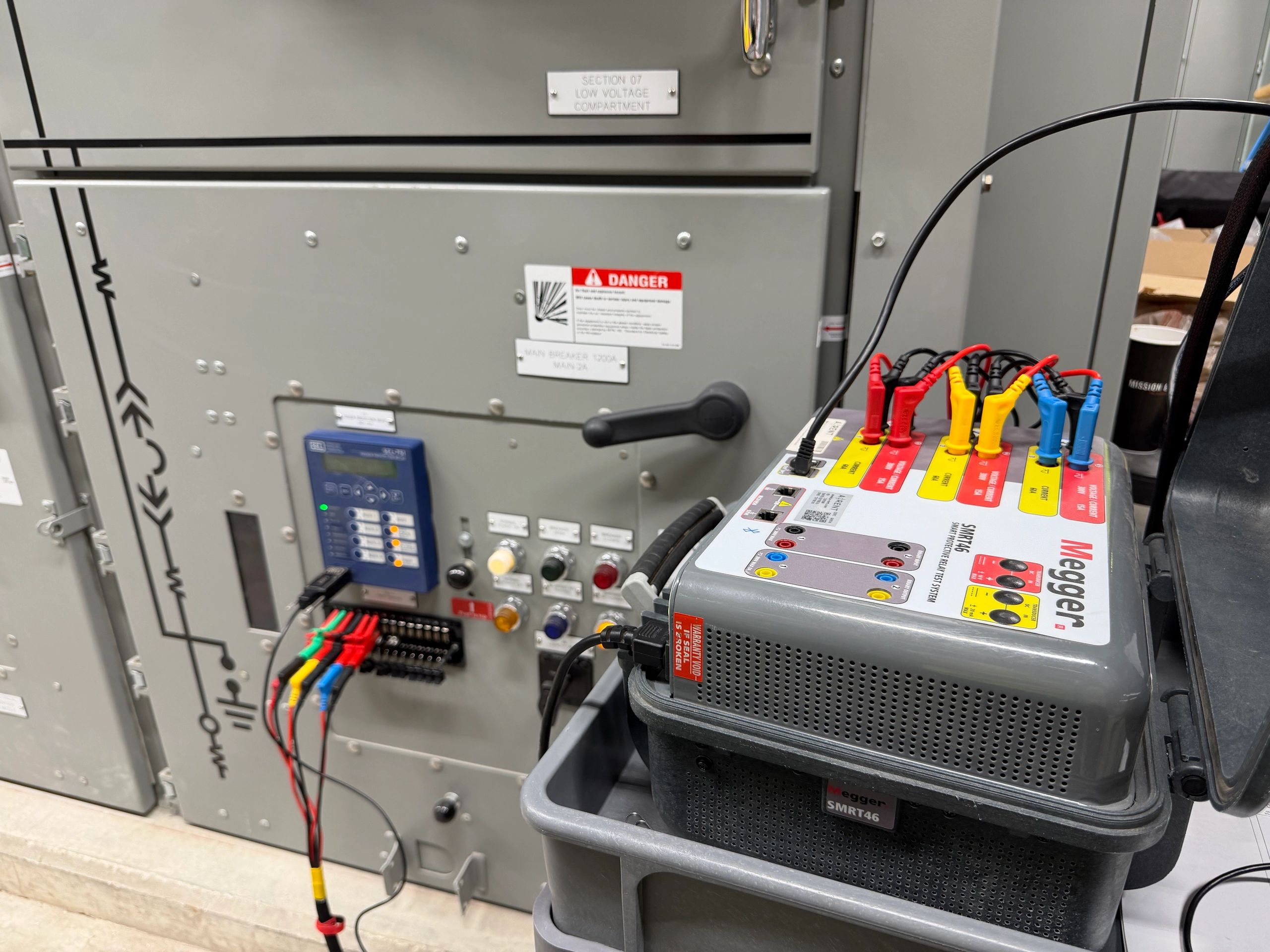
Secondary injection testing proves a relay does what its settings say it will. NewEra Testing injects three-phase currents and voltages into relay analog inputs, then verifies pickup, dropout, timing curves, directional and restraint characteristics, and output logic. Settings are applied and verified as issued by the engineer of record or client. Results are compared against expected values and delivered in clear, traceable documentation.

Equipment covered

Microprocessor multifunction protective relays

Electromechanical and solid-state relays

Transformer differential protection schemes

Bus and feeder protection schemes

Line distance protection relays

Generator protection relays

Motor protection relays

Breaker failure and lockout schemes

Low-voltage breaker electronic trip units

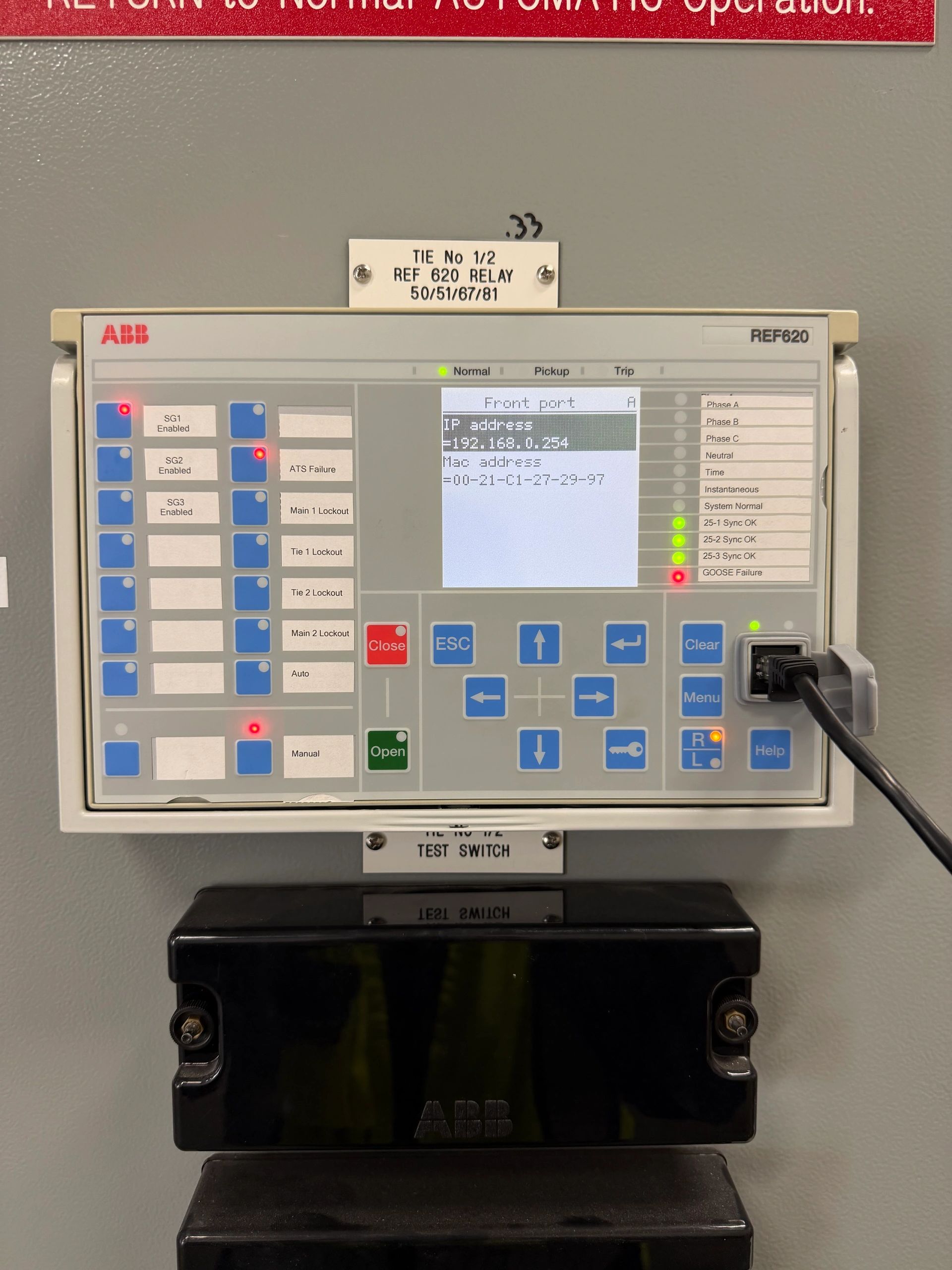
IEC 61850 GOOSE-enabled IEDs

Testing & Capabilities

Protection functions verified, not assumed

Comprehensive three-phase testing that goes beyond standard protection function verification, from element pickup to the trip coil and the communication network behind it.

01

Overcurrent Element Testing

Pickup, dropout, and time-current curve verification for 50/51, 50N/51N, and 67 elements, including directional characteristics and reset timing.

01

Overcurrent Element Testing

Pickup, dropout, and time-current curve verification for 50/51, 50N/51N, and 67 elements, including directional characteristics and reset timing.

02

Differential Protection Testing

Minimum pickup and slope characteristics for 87T, 87B, 87G, and 87M, plus harmonic restraint and unrestrained elements on transformer differential.

02

Differential Protection Testing

Minimum pickup and slope characteristics for 87T, 87B, 87G, and 87M, plus harmonic restraint and unrestrained elements on transformer differential.

03

Distance Protection Testing

Mho and quadrilateral zone reach, angle, and timing for 21 elements, with shot and search tests on phase and ground loops.

03

Distance Protection Testing

Mho and quadrilateral zone reach, angle, and timing for 21 elements, with shot and search tests on phase and ground loops.

04

Generator & Motor Protection

Loss of field, reverse power, stator fault, overload, phase imbalance, and stall elements verified against the protected asset’s issued settings.

04

Generator & Motor Protection

Loss of field, reverse power, stator fault, overload, phase imbalance, and stall elements verified against the protected asset’s issued settings.

05

Logic & Trip Path Checks

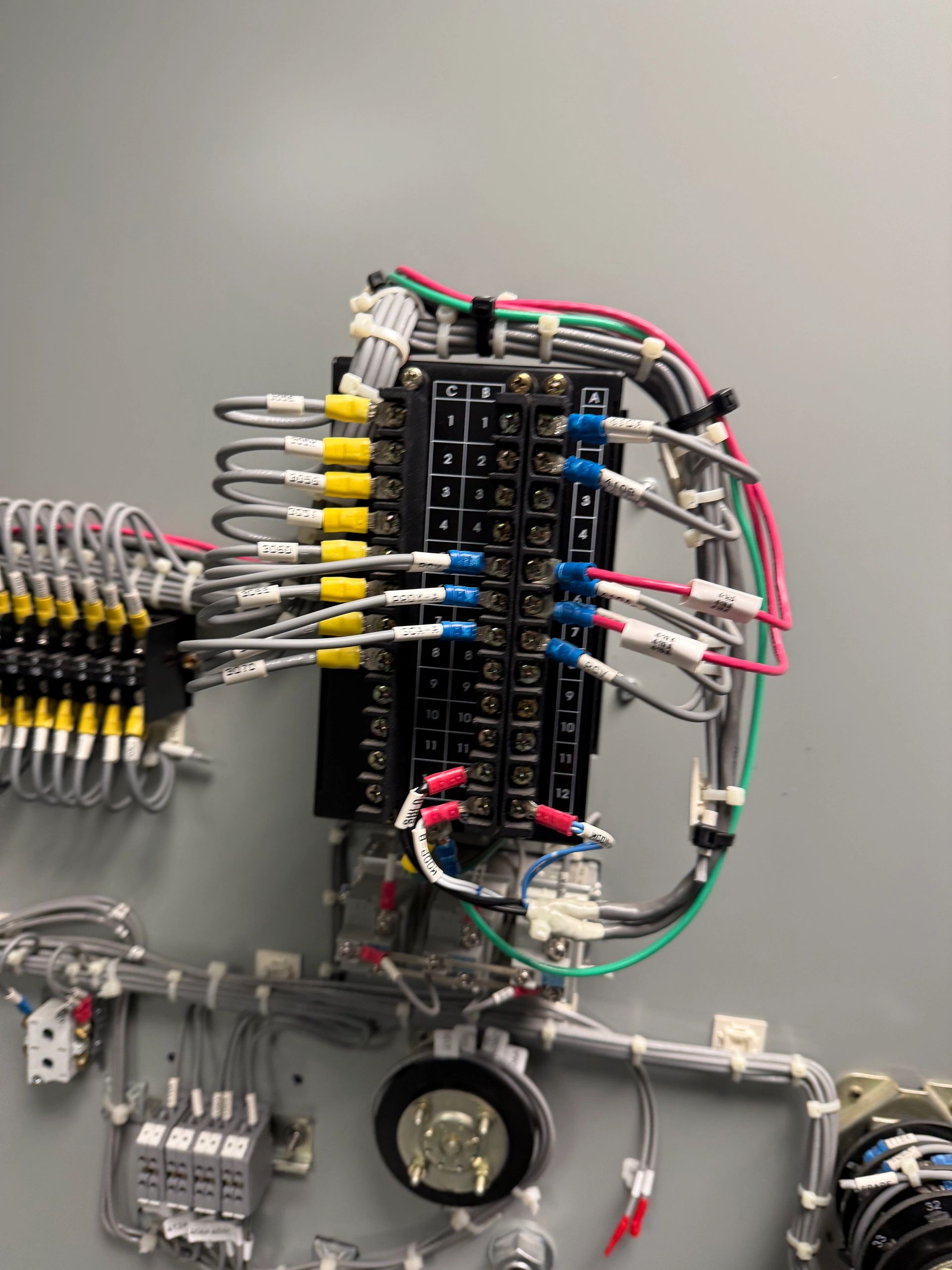
Programmable logic, I/O mapping, and breaker failure schemes proven end to end, including trip checks when outages allow.

05

Logic & Trip Path Checks

Programmable logic, I/O mapping, and breaker failure schemes proven end to end, including trip checks when outages allow.

06

IEC 61850 GOOSE Validation

GOOSE messaging integrity, publisher and subscriber mapping, and time synchronization validated so protection signals arrive when and where they should.

06

IEC 61850 GOOSE Validation

GOOSE messaging integrity, publisher and subscriber mapping, and time synchronization validated so protection signals arrive when and where they should.

Applicable Standards

Performed to recognized industry standards.

ANSI/NETA ATS

Acceptance Testing Specifications for Electrical Power Equipment and Systems

ANSI/NETA MTS

Maintenance Testing Specifications for Electrical Power Equipment and Systems

IEEE C37.2

Standard for Electrical Power System Device Function Numbers, Acronyms, and Contact Designations

IEC 61850

Communication Networks and Systems for Power Utility Automation

NFPA 70E

Standard for Electrical Safety in the Workplace

From the Field
Methodology

How every job runs.

01

Scope & Review

We review drawings, one-lines, and the settings issued by the engineer of record or client before mobilizing.

01

Scope & Review

We review drawings, one-lines, and the settings issued by the engineer of record or client before mobilizing.

02

Safe Mobilization

Job briefing, hazard awareness, arc flash precautions, and proper PPE are in place before any test begins.

02

Safe Mobilization

Job briefing, hazard awareness, arc flash precautions, and proper PPE are in place before any test begins.

03

Test & Verify

Relay settings are applied and verified; equipment is tested against ANSI/NETA and manufacturer acceptance criteria.

03

Test & Verify

Relay settings are applied and verified; equipment is tested against ANSI/NETA and manufacturer acceptance criteria.

04

Document & Deliver

Detailed technical documentation records results, as-left settings, and deficiencies — ready for your records and the next test cycle.

04

Document & Deliver

Detailed technical documentation records results, as-left settings, and deficiencies — ready for your records and the next test cycle.

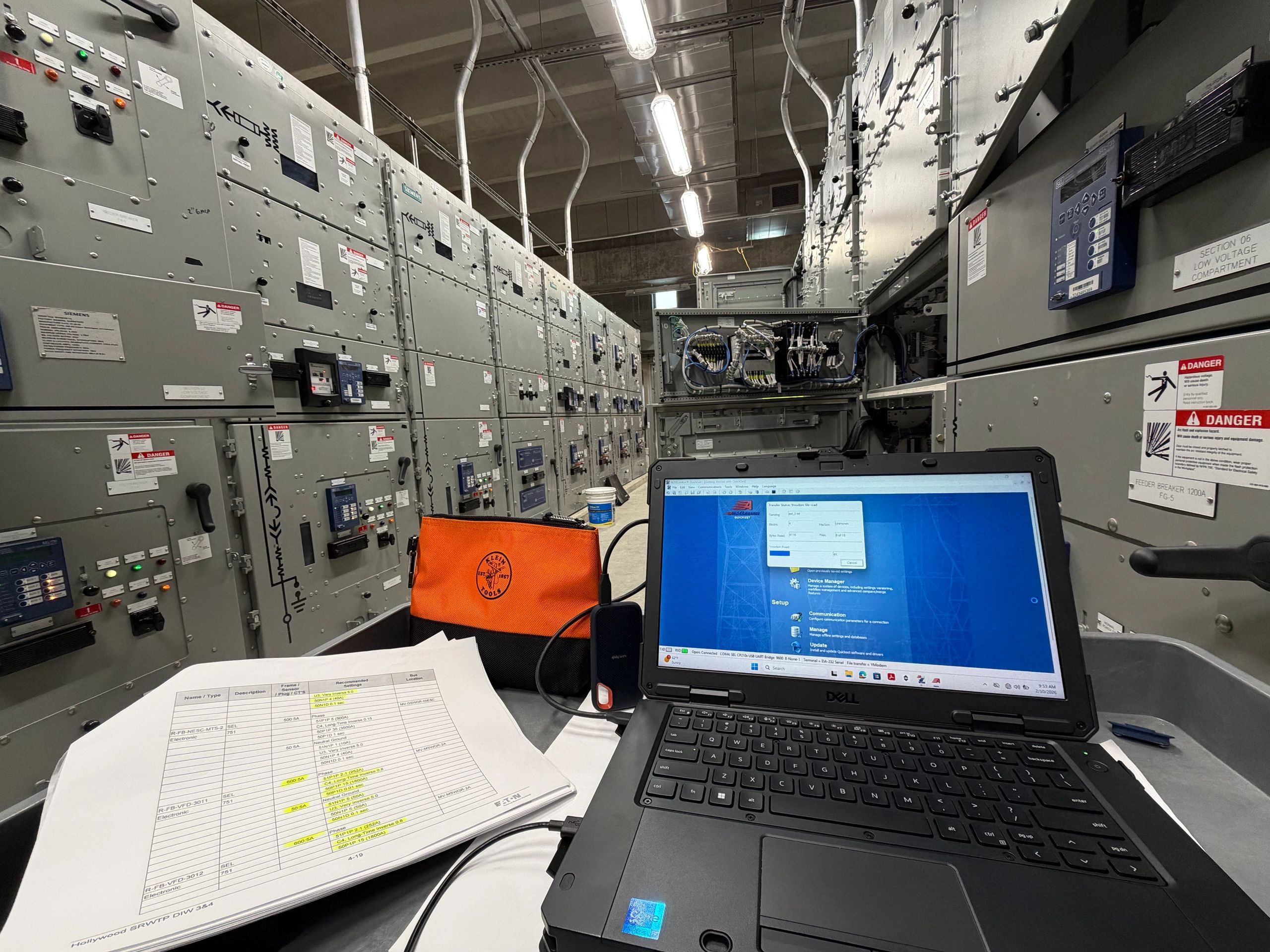
Switchgear lineup in an electrical room

FAQs

Answers to common questions

What is the difference between secondary and primary injection testing?

Secondary injection applies test currents and voltages directly to the relay, bypassing the instrument transformers. Primary injection drives current through the primary conductors and CTs. Secondary injection isolates relay performance; primary injection confirms the complete current path, including CT ratio and polarity.

Do you develop or change relay settings?

No. We apply and verify settings exactly as issued by the engineer of record or client. Any discrepancy found during testing is documented and returned to them for resolution before the relay goes into service.

Can you test protection schemes that use IEC 61850 GOOSE messaging?

Yes. We validate GOOSE messaging integrity, publisher and subscriber configuration, and time synchronization, then confirm that virtual trip and interlock signals operate the correct outputs within the scheme’s expected timing.

What do we receive after testing is complete?

Detailed technical documentation with as-found and as-left results, injected values, measured response, expected values, and pass/fail status for each element tested. It gives you verified relay performance on record for audits, insurers, and future maintenance.

What is the difference between secondary and primary injection testing?

Secondary injection applies test currents and voltages directly to the relay, bypassing the instrument transformers. Primary injection drives current through the primary conductors and CTs. Secondary injection isolates relay performance; primary injection confirms the complete current path, including CT ratio and polarity.

Do you develop or change relay settings?

No. We apply and verify settings exactly as issued by the engineer of record or client. Any discrepancy found during testing is documented and returned to them for resolution before the relay goes into service.

Can you test protection schemes that use IEC 61850 GOOSE messaging?

Yes. We validate GOOSE messaging integrity, publisher and subscriber configuration, and time synchronization, then confirm that virtual trip and interlock signals operate the correct outputs within the scheme’s expected timing.

What do we receive after testing is complete?

Detailed technical documentation with as-found and as-left results, injected values, measured response, expected values, and pass/fail status for each element tested. It gives you verified relay performance on record for audits, insurers, and future maintenance.

Request a Quote

Schedule testing, commissioning, or emergency field support.

Share your scope and schedule — a field service technician is dispatched on request. Call (321) 550-1192 or email nelson@neweratesting.com. Hours 7:00 am – 7:00 pm.

Switchgear lineup with protective relays and control devices

Request a Quote

Schedule testing, commissioning, or emergency field support.

Share your scope and schedule — a field service technician is dispatched on request. Call (321) 550-1192 or email nelson@neweratesting.com. Hours 7:00 am – 7:00 pm.

Switchgear lineup with protective relays and control devices

Request a Quote

Schedule testing, commissioning, or emergency field support.

Share your scope and schedule — a field service technician is dispatched on request. Call (321) 550-1192 or email nelson@neweratesting.com. Hours 7:00 am – 7:00 pm.

Switchgear lineup with protective relays and control devices

Create a free website with Framer, the website builder loved by startups, designers and agencies.